
Team Techsaga
Gain valuable insights and stay updated with the latest innovations through our engaging blog. Explore trends, technology advancements, and expert opinions to navigate the ever-evolving world of IT.
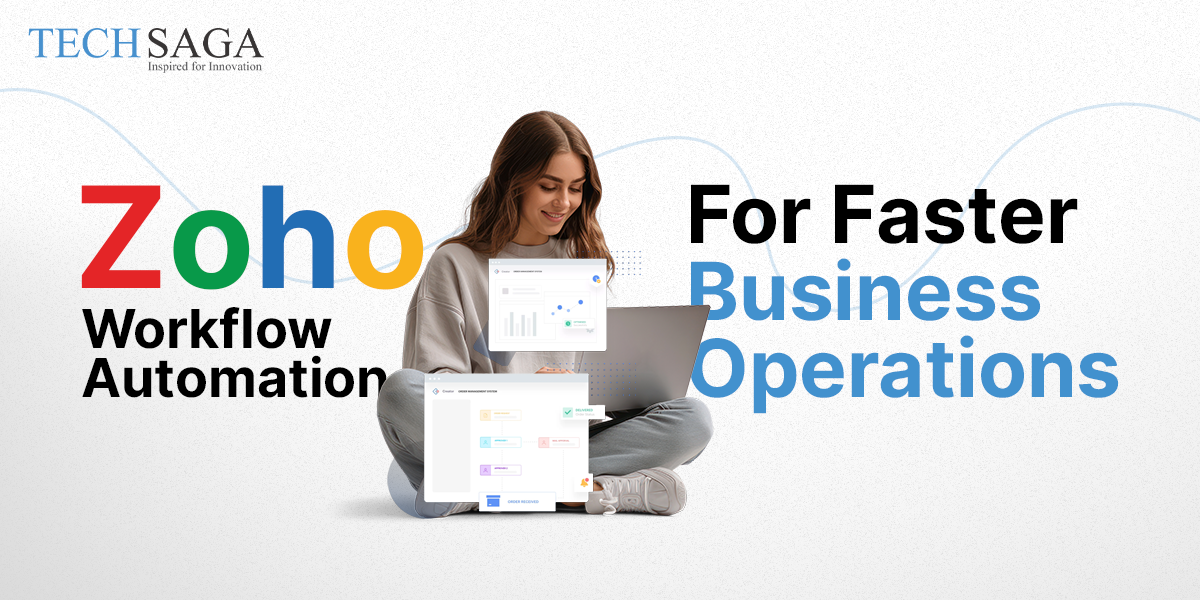
Zoho Workflow Automation for Faster Business Operations
We see it during every single digital overhaul. Teams get stuck spending hours copying data from one screen to another, running in circles while trying to keep up with daily tasks. It is an exhausting way to work, and honestly, it kills momentum. People want to focus on strategy and real growth, but they are drowning in manual updates. Using Zoho CRM Automation is usually the turning point where companies finally stop losing time to these repetitive administrative bottlenecks. When you automate those heavy, predictable tasks, the entire pace of the office changes for the better.
How Legacy Systems Fail Modern Teams Without Workflow Automation
Every time a sales rep manually updates a deal status, a delay occurs. It seems like a two-minute task, but those minutes accumulate across a week. We have looked at operations across various sectors, and the friction is always the same. People forget to send the follow-up email or the notification arrives late. McKinsey reports that workers spend roughly 20% of their workweek just searching for internal information or tracking down colleagues. That is a massive chunk of time wasted on basic coordination that could easily happen in the background.
Fragmented Communication Channels Create Silos
When departments use separate tools without a central link, information goes missing. The sales team uses one application, support uses another, and finance is left completely in the dark. This fragmentation creates massive blind spots. You cannot expect fast operations when your data lives in isolated pockets. A simple update requires three different phone calls or Slack messages just to confirm a customer status.
Slow Approval Chains Delay Major Deals
Contracts sit in inboxes waiting for a manager who is out of the office. By the time the approval happens, the client has lost interest. Delayed approvals are a silent killer for quarterly revenue targets. When the process depends entirely on a human remembering to check their mail, consistency disappears.
The Reality of Scaling with Workflow Automation
When we talk about Workflow Automation, we are really talking about creating a predictable structure for your business. It means defining exactly what happens after a lead fills out a form. The system takes over the routing, the alerts, and the task assignments. Gartner highlights that organizations lowering operational friction through workflow automation can reduce costs by nearly 30%. That savings does not come from cutting corners. It comes from removing the accidental mistakes that happen when people are rushed.
Setting Clear Rules Prevents Dropped Leads
An automated rule ensures that no prospect is ignored for more than an hour. The system assigns the task based on territory or availability instantly. This structure keeps the pipeline moving without constant management oversight.
Realtime Updates Keep Management Informed
Instead of waiting for weekly reports, leaders can see pipeline shifts as they happen. Decisions become proactive rather than reactive. You see the bottleneck before it causes a major project delay.
Connecting the Ecosystem Through Zoho Integration Services
True efficiency requires different applications to speak the same language. If your CRM cannot communicate with your invoicing system, you still have a manual gap. Deploying tailored Zoho Integration Services solves this exact issue by linking your customer data directly to your financial and support tools. At Techsaga, we have seen this change transform operations for our clients, including major educational consultancies and regional service providers. They went from messy spreadsheet handoffs to a single unified database. Our development teams focus on building these seamless connections so information flows instantly where it is needed.
Eliminating Duplicate Work Saves Massive Hours
When systems share data, employees only enter a customer profile once. The accounting software updates automatically when the sales rep closes the deal. This single entry point drastically reduces formatting mistakes and duplicate records.
Creating a Single Source of Truth
Having one definitive record prevents arguments between sales and finance regarding numbers. Everyone looks at the exact same dashboard. The accuracy of your operational metrics shoots up immediately. Effective workflow automation is not about replacing human decisionmaking. It is about removing the tedious tasks so your team can focus on work that requires actual human judgment.
Designing a Sustainable Workflow Automation Blueprint
You cannot automate a broken process and expect it to magically work. You have to clean up the steps first. Figure out where the handoffs get confusing before writing a single line of code or setting a trigger. We always tell partners to sketch their current path on a whiteboard. Look for the places where people say “then I usually wait for an email.” Those wait states are your primary targets for optimization.
Start with High-Impact Quick Wins
Do not try to change every department on the first day. Fix the automated email triggers or the lead assignment rules first. Let the team feel the relief of reduced workload before moving to complex logic.
Train Teams to Trust the New Triggers
Employees often try to double-check the automated system manually out of habit. Building trust takes time and consistent performance. Once they see the system works perfectly every time they let go of the old methods.
Keeping Operations Rhythmic and Predictable
Systems need maintenance as business goals shift over time. A rule that worked perfectly last year might cause friction today because your team size doubled. We continuously evaluate how data moves through these pipelines to ensure things remain fast. The goal is a quiet, efficient backoffice where things just happen correctly. When your platform handles Zoho Integration routing your employees can spend their energy speaking with clients and closing deals.
The Longterm Impact of Modernizing Tools
Shifting toward workflow automation changes the culture of an organization. People stop feeling frantic because the system manages the tracking. The investment pays off in lower turnover and much faster project delivery times. We see organizations grow their capacity significantly without needing to immediately double their administrative headcount. It gives the business the structural stability required to scale smoothly into new territories.
Final Thoughts
Investing in Business Process Automation is what separates chaotic companies from scalable ones. We know the transition requires effort and clear thinking about your daily tasks. It is about building a reliable foundation so your business can run efficiently without relying on constant manual intervention. When your infrastructure is connected scaling up becomes a natural next step rather than a logistical nightmare.
TAG: Techsaga USA