
Team Techsaga
Gain valuable insights and stay updated with the latest innovations through our engaging blog. Explore trends, technology advancements, and expert opinions to navigate the ever-evolving world of IT.
How to Balance the Three Pillars of SEO for Long-Term Growth
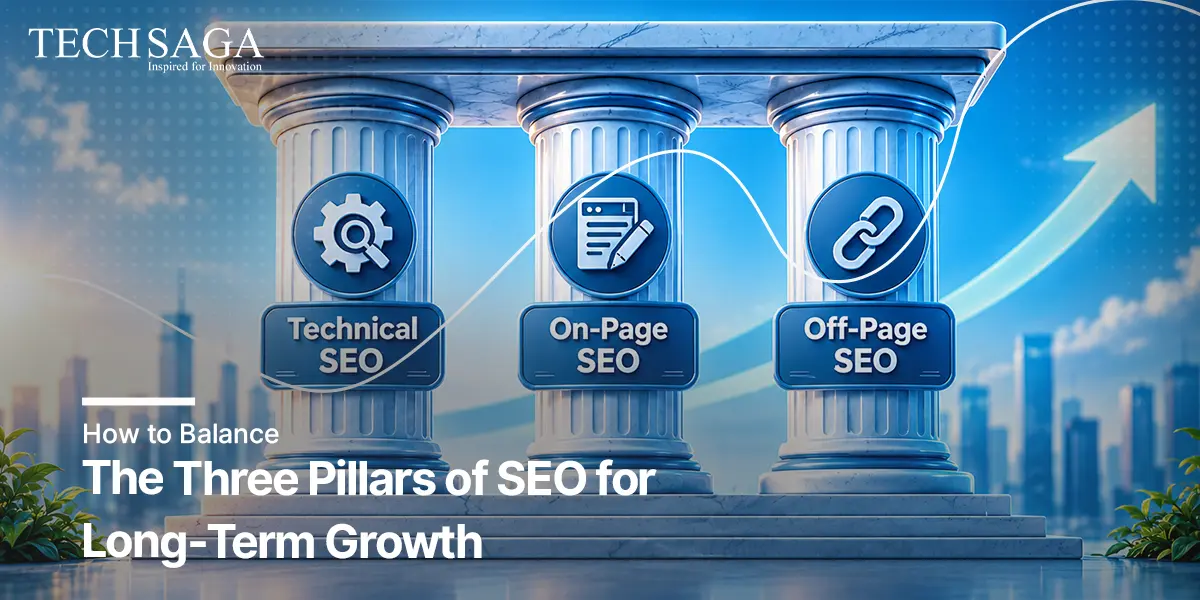
SEO takes time. A few blogs may bring visitors and some backlinks may improve your website’s reach. But neither will do much if the website itself has problems. Long-term growth needs three things to work together: a website that runs well, content that answers real questions and trust from other websites. These are the three Pillars of SEO. A digital marketing agency needs to look at all three before planning a campaign. Otherwise focusing on one area while ignoring the others can leave a business with traffic but few enquiries.
1. Technical SEO: Fix the Problems Behind Your Website
First technical SEO includes the website features that help search engines find and better understand all of your web pages. It also helps visitors use the website with greater ease. High-quality content may still underperform when search engines can’t reach key pages or a site requires excessive time to load.
Start with these basic checks:
Page speed: Compress large images and remove scripts that slow down the site.
Mobile layout: Make sure menus, buttons forms and text work well on phones.
Indexing: Check whether important pages appear in Google’s index.
Broken links: Fix links that lead to missing pages.
Website structure: Keep menus simple and connect related pages.
Security: Make sure your website uses HTTPS.
XML sitemap: Keep it updated so search engines can find important pages.
For example if several service pages are blocked from indexing potential customers may never find them through Google. Similarly a slow website may cause visitors to leave before making an inquiry.
That is why technical SEO is one of the key pillars of SEO. Fixing these basic issues gives your content a better chance to perform.
2. On-Page SEO: Make Each Page Worth Reading
When the website looks polished, focus on the content it contains. On-page SEO keeps every page understandable and valuable for users and search engines.
Every page needs a clear purpose. Service pages should describe what the company provides while blogs should address particular questions or help readers understand a subject.
Search intent counts too. Someone seeking enterprise software might want a vendor whereas someone researching software development costs could remain undecided while comparing various other available options. Your material must handle both requirements separately.
Focus on these areas:
Page titles: Clearly describe what each page offers.
Meta descriptions: Give readers a reason to visit.
Headings: Organise content into easy-to-read sections.
Keywords: Use relevant search terms naturally.
Internal links: Connect relevant blogs and service pages.
Image alt text: Describe images where needed.
Content updates: Review old pages when services or business details change.
Good content does not need fancy language. It needs to answer real questions. For instance, a cloud computing blog should describe how companies use such offerings and what factors to weigh before selecting a supplier. Broad claims about innovation rarely help readers make that decision.
For businesses working with a digital marketing company noida content planning should also connect blogs with the services being offered. After all publishing ten blogs without linking them to relevant service pages may bring traffic but it does little to guide readers towards an inquiry.
Sometimes an existing page needs a proper rewrite more than another new blog. That is worth checking before planning the next batch of content.
3. Off-Page SEO: Build Trust Outside Your Website
People may find a business through sources besides its website. They might come across its name in an industry article, business listing news story or online discussion.
This is where off-page SEO comes in. Backlinks remain a crucial element of it. A backlink links to your website from another online site. Links from relevant and trusted websites can help search engines understand your website’s credibility and subject area.
However, more links do not always mean better results. Links from unrelated or poor-quality websites may add little value. A relevant mention from a trusted industry publication can be far more useful.
Some ways to build a stronger online presence include:
Guest blogs: Share useful knowledge on relevant industry websites.
Digital PR: Share company news research and expert views with publications.
Business directories: Keep your company name address and contact information correct.
Industry collaborations: Create valuable content with relevant business partners.
Brand references: Increase exposure on channels your intended audience follows.
Original resources: Publish reports, guides and insights that others may reference.
Therefore avoid shortcuts such as buying bulk links or placing links on random websites. Focus on earning relevant links from sources that make sense for your business.
At Techsaga we understand how different marketing activities can support a shared business goal. Our work with IPSA Group included content marketing, paid advertising and other digital channels to strengthen its presence across international markets. The published case study reports 400% organic growth and a stronger B2B lead pipeline across four markets.
This is why off-page SEO should work alongside the other Pillars of SEO. A good link may bring visitors to your website but useful content and a good user experience give them a reason to stay.
4. Keep All Three Areas Moving Together
The three Pillars of SEO work best when they support one another. A new website may need technical fixes first while an established website may need stronger content or relevant backlinks. Hence always start by reviewing your website through Google Search Console and Google Analytics 4. Check which pages attract visitors, what they search for and where they drop off.
Use these findings to prioritise your work:
Fix technical issues first: Start by improving page speed, mobile usability, indexing and broken links.
Next, improve key pages: Make sure your service pages are clear, relevant and useful to visitors.
Then, create relevant content: Focus on topics your customers are actively searching for.
Alongside content creation, build quality backlinks: Earn links from relevant and trusted industry websites.
Meanwhile, track enquiries: Measure leads and conversions rather than focusing only on traffic and rankings.
Finally, review performance: Analyse the results and make improvements wherever needed.
For example a business may see blog traffic increase without getting more enquiries. The issue could be irrelevant traffic, unclear service pages or a poor contact experience. Publishing more blogs will not solve these problems.
At Techsaga we connect technical SEO content, paid campaigns and performance tracking within a wider digital marketing plan. The focus stays on business growth not rankings alone.
Conclusion
Long-term SEO growth comes from keeping all three areas in good shape. A well-built website makes it easier for search engines to find your pages. Useful content gives visitors a reason to stay while relevant links help build trust. As your business grows your priorities may change too. If you plan to Hire digital marketing agency support choose a team that looks beyond rankings and understands what brings real business enquiries.
TAG: Techsaga USA