
Team Techsaga
Gain valuable insights and stay updated with the latest innovations through our engaging blog. Explore trends, technology advancements, and expert opinions to navigate the ever-evolving world of IT.
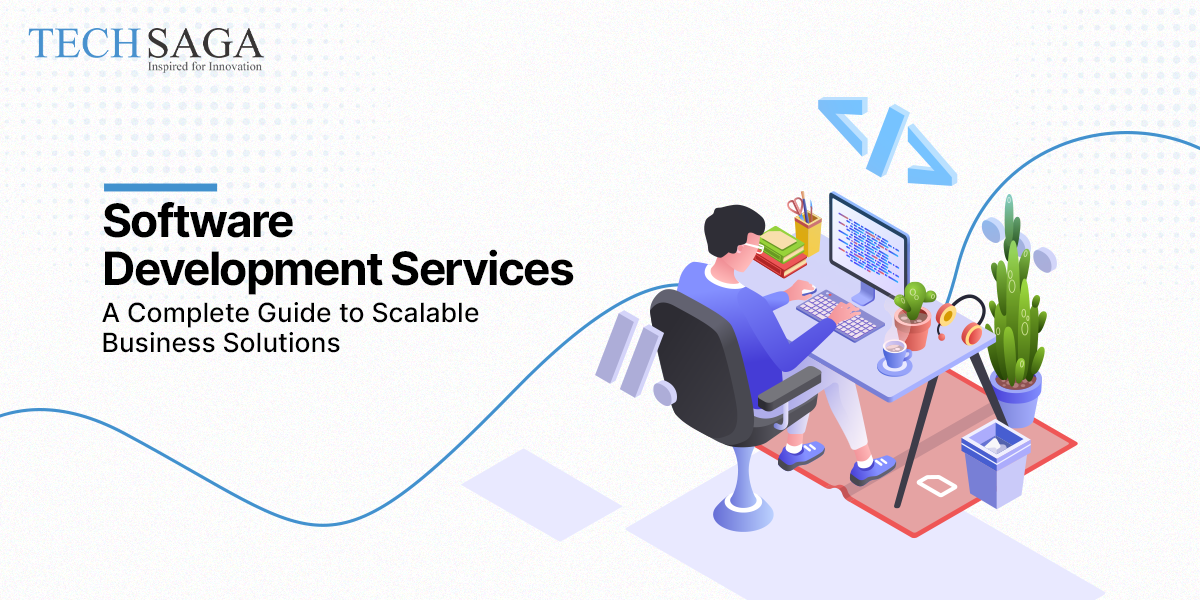
Software Development Services: A Complete Guide to Scalable Business Solutions
Businesses rarely struggle because they lack software. They struggle because the software they rely on cannot keep pace with growth. Systems that work for fifty employees often become bottlenecks at five hundred. Manual workflows slow operations. Legacy applications resist new integrations. Customer expectations outgrow outdated digital experiences. Building Software Development solutions with scalability in mind prevents these challenges before they become expensive obstacles. Throughout our work delivering Software Development Services , we have seen that businesses achieve stronger long-term results when technology is designed to evolve alongside their operations rather than requiring constant replacement as demands increase.
Why Software Development Creates Scalable Business Solutions
Modern software is not only a business tool. It serves as the core that links customers, staff, and daily operations. Teams may need tools for internal tasks, apps for customers, or large enterprise platforms. With solid Software Development Services, each new user, each transaction, and each added integration should fit in. The system should grow without turning into a burden.
Gartner notes that updating application design can boost day-to-day efficiency. It can also lower the cost later that comes from keeping older, split legacy systems. Scalability starts with careful planning. It is not something to chase only after performance starts to drop.
Custom Software Development Adapts to Business Growth
Every business has unique processes that generic software cannot fully support. Custom solutions allow organizations to build features that match their workflows while eliminating unnecessary complexity.
A scalable custom solution typically includes:
- Workflow automation
- Business-specific dashboards
- Customer management systems
- Inventory and resource management
- Secure third-party integrations
A good team for building software helps a company make systems that keep up as it grows. This often means fewer big rebuilds later, even if the way the business runs changes.
Using the cloud can also help with daily work. Cloud services let you add more power when demand rises, and scale back when it drops. You do not need to buy new machines each time traffic spikes. If activity slows, costs can drop as well.
Cloud-first Software Development provides:
- Remote accessibility
- Automatic scaling
- Faster deployments
- Improved disaster recovery
- Lower infrastructure maintenance
Building cloud-native applications also simplifies future updates because new features can be deployed without disrupting business operations.
Software Design Services Shape Better User Experiences
A successful application is not measured only by functionality. People usually want screens that make things feel easy. They expect less hassle when they complete daily tasks. Good software work should mix how the product looks and feels with the plan under the hood. Then each step feels smooth.
Statista has shown that users do not stick around when a site is slow or hard to follow. Confusing pages can cut interest fast. A cleaner interface can help more people start using the product. It can also lower the number of help tickets. Over time, that can support staying with the service.
User-centered design can lift how many users start and keep using the product
Early on, the team should focus on how people actually behave. That way, they pick features based on what users need. The goal is to solve real business issues. It also helps avoid extra complexity that does not add value.
Design activities often include:
- User research
- Wireframing
- Interactive prototypes
- Interface testing
- Accessibility improvements
This approach helps a firm test an idea first, before it puts in big money to build.
When the system can grow, you can add new parts later without too much hassle.With a lot of work, moving fast early feels great. Then later you hit slowdowns. This often happens when the plan was not made for the long haul.
- Modular components
- API-driven integrations
- Secure authentication systems
- Optimized databases
- Independent service deployment
These technical decisions allow businesses to introduce new features without disrupting existing functionality.
The Software Development Process That Drives Business Growth
Building scalable software requires a structured development process where each phase contributes to long-term reliability instead of focusing only on launch deadlines.
Requirement Analysis Aligns Business Goals
Every successful project begins by understanding business objectives. Clear requirements reduce project risks while helping development teams prioritize the features that create measurable business value.
This stage defines:
- Business objectives
- User needs
- Technical requirements
- Project scope
- Success metrics
Design and Development Build Reliable Foundations
Once planning is complete, teams begin creating the application’s architecture and user interface before writing production code. This combination of planning and execution allows developers to solve technical challenges early.
A professional software design and development company ensures that design decisions support both usability and future scalability throughout development.
Testing Protects Software Quality
Quality assurance remains essential throughout the development lifecycle. Testing identifies performance issues, security vulnerabilities, and usability problems before software reaches users.
Testing commonly includes:
- Functional testing
- Performance testing
- Security testing
- Compatibility testing
- User acceptance testing
Continuous testing throughout development helps reduce expensive fixes after deployment.
Deployment and Ongoing Maintenance Sustain Performance
Launching software is only one milestone. Long-term success depends on regular maintenance, security updates, and performance optimization.
Ongoing support typically includes:
- Bug fixes
- Feature enhancements
- Security updates
- Performance monitoring
- Infrastructure optimization
Businesses that invest in continuous improvement keep their applications competitive as technology and customer expectations evolve.
How Modern Software Development Supports Enterprise Growth
As businesses expand, software must integrate multiple departments, platforms, and customer touchpoints without creating operational silos.
Modern Software Development often includes enterprise integrations with:
- CRM platforms
- ERP systems
- HR management tools
- Payment gateways
- Analytics platforms
- Cloud infrastructure
These connected ecosystems reduce manual work while giving decision-makers better visibility into business performance.
Security Strengthens Customer Trust
Cybersecurity is no longer an optional feature. Organizations handling customer data must build security directly into the development process rather than adding protections later.
Strong security practices include:
- Data encryption
- Role-based access controls
- Multi-factor authentication
- Secure APIs
Check security regularly.
When security is built into the work from the start, companies can follow required rules and keep customer trust.
Automation Reduces Operational Costs
Automation cuts down day to day spending. It stays a big edge in software that can grow with a company. Rather than doing the same manual steps over and over, teams can run their work more smoothly. This can cover more than one department.
Automation can improve:
- Customer onboarding
- Invoice processing
- Approval workflows
- Reporting
- Internal communication
These improvements allow employees to focus on strategic work instead of administrative tasks.
Why Businesses Choose Techsaga
Building software that grows is not only about writing code. You also need a partner who listens to your business aims and thinks about how people will use the product. That person should know how cloud work is set up and how different parts of a company system fit together.
Techsaga offers help with software development. With that support, teams can fix and improve their workflows. Then they can prepare for growth that stays strong over time.
Our expertise includes:
- Custom software development
- Web and mobile application development
- Cloud application engineering
- Enterprise software solutions
- Quality assurance and continuous testing
- Digital transformation consulting
- Integration with Salesforce, Zoho, SAP, and Workday
As a software design and development company, we focus on building secure, scalable, and future-ready solutions that support long-term business success.
Conclusion
Helping a firm grow its software is often worth it over time. When the system is built right, it can stretch as more people sign up. It can also deal with the day to day shifts that come with regular work.If a team plans early, listens to the users, and keeps improving each release, the codebase stays healthier. In that setup, teams usually ship work faster. The platform also stays more stable. People who use the product often notice the difference too.
This applies across many types of projects. It might mean fixing and modernizing an older system. . Picking the right software development support counts here. The same holds for getting strong software design services help. When these pieces come together, you get a base that can handle steady growth as things keep moving deeper into digital life.
TAG: Techsaga USA