
Team Techsaga
Gain valuable insights and stay updated with the latest innovations through our engaging blog. Explore trends, technology advancements, and expert opinions to navigate the ever-evolving world of IT.
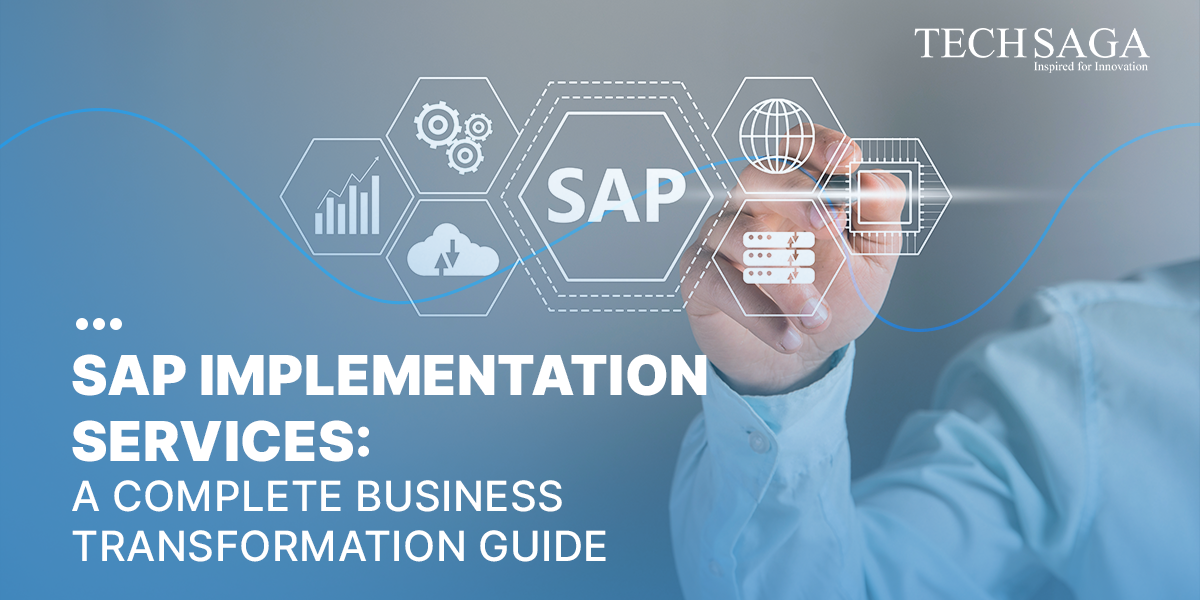
SAP Implementation Services: A Complete Business Transformation Guide
When businesses decide to invest in SAP, the conversation usually starts with technology. Which modules are required? How long will implementation take? What will the system cost? At Techsaga, we have found that these questions rarely determine the success of a project. The bigger challenge is preparing the business for the way SAP will work after deployment. That preparation starts much earlier than implementation itself. Whether the project involves SAP Services or SAP Integration Services, businesses achieve better results when they focus on processes before software.
Every Successful SAP Services Project Starts With Business Discovery
An SAP implementation does not begin when consultants configure modules. It begins when the business understands how work moves between departments. Every organisation develops its own way of handling purchasing, finance, inventory, sales and approvals. Some of those processes support growth while others quietly create delays that people accept as part of daily work.
At Techsaga, we always study existing operations before recommending technical changes. There is little value in moving inefficient processes into a new ERP system. SAP simply makes those gaps more visible.
Process Mapping Reduces Problems Later
Take a simple purchase request. One department may approve it through emails, another may rely on spreadsheets, while finance records the same transaction differently. Everyone completes their task, yet the information does not always match.
During implementation, these differences become much easier to identify. Process mapping allows businesses to remove duplicate activities, clarify responsibilities, and create a workflow that every department follows. That preparation reduces unnecessary changes after the system goes live.
Implementation of SAP Services Connects Departments, Not Just Applications
Many businesses think SAP implementation is mainly a software deployment exercise. In practice, it is a business alignment project. The objective is not to replace old applications but to help every department work with the same information.
Sales should not maintain one version of customer data while finance works with another. Procurement should not depend on manual updates before inventory reflects current stock. When information moves freely across departments, reporting becomes more accurate, and decision-making becomes much faster.
Integration of SAP services creates one reliable source of Information
Most organisations already use multiple business applications. Customer information may sit inside a CRM, production teams may work through manufacturing software, and HR may use an entirely different platform. Establishing connections between these systems is frequently as crucial as the implementation of SAP itself. Thoughtful integration eliminates redundant data entry, minimizes reporting inaccuracies, and enhances teams’ trust in the information they utilize daily.
At Techsaga, we consider integration to be an integral component of the overall implementation strategy rather than a technical task. Hence, this methodology is often proven to enable businesses to create an ecosystem where systems collaborate rather than function independently.
Technology Delivers Results Only When People Use It Correctly
User adoption is an aspect of every SAP project that often does not receive the focus it warrants. A system that is well-configured cannot enhance business operations if employees persist in their old habits. We have observed instances where the software functioned precisely as intended yet teams continued to depend on spreadsheets due to their familiarity.
This is the reason Techsaga considers training an integral part of the implementation process rather than a step that occurs post-deployment. It is essential for teams to grasp how the new process integrates into their daily tasks. Once they comprehend the rationale behind each workflow, then the adoption process becomes significantly smoother; it also tends to be error-free naturally.
SAP Services: Digital Transformation Begins With Everyday Operations
Many businesses associate SAP Digital Transformation with automation, dashboards, and modern technology. In reality, the change starts much earlier. The beginning of this happens when various departments stop operating independently and start sharing correct information through one integrated system.
For example, when the sales team updates an order, the inventory should automatically adjust to that change without any manual input. The finance team should also get that information right away, without having to wait for another department to update a spreadsheet. These improvements might seem minor on their own, but together they really change the way the business runs every day.
Implementation of SAP services Does Not End on Go-Live Day
Many organisations treat go-live as the finish line. From our experience at Techsaga, it marks the beginning of the next stage. Once employees start working inside SAP, real business scenarios begin to appear. Some workflows need refinement, reports require adjustment, and users often discover opportunities that were not visible during planning.
That is why post-implementation support matters. Monitoring system performance, resolving user concerns, and refining business processes help organisations gain more value from their SAP investment over time.
Continuous Improvement of SAP Services Protects Long-Term Value
Business requirements never remain static. Companies introduce new products, expand into different markets, and update internal processes. The ERP environment should support those changes instead of becoming a limitation.
Regular reviews help identify where workflows can improve, where reports need adjustment, and where additional automation makes sense. Small improvements made consistently often deliver greater business value than one large system upgrade years later.
Conclusion
A success of SAP is not measured by how quickly the software goes live. It is measured by how effectively the business works after deployment. When we have clear processes, then departments can share the same information. The consistency in communication makes employees understand the system. So in this case, SAP services become a foundation for better business decisions instead of another IT project. At Techsaga, we approach every SAP implementation with a long-term process. We keep focusing on systems that support business operations. Additionally allowing the business to have space to grow in the future too.
Hence whether your organisation is planning its first ERP deployment or modernising an existing environment, the right SAP ERP Solutions should strengthen operations, simplify collaboration and support sustainable business growth.
TAG: Techsaga USA