
Team Techsaga
Gain valuable insights and stay updated with the latest innovations through our engaging blog. Explore trends, technology advancements, and expert opinions to navigate the ever-evolving world of IT.
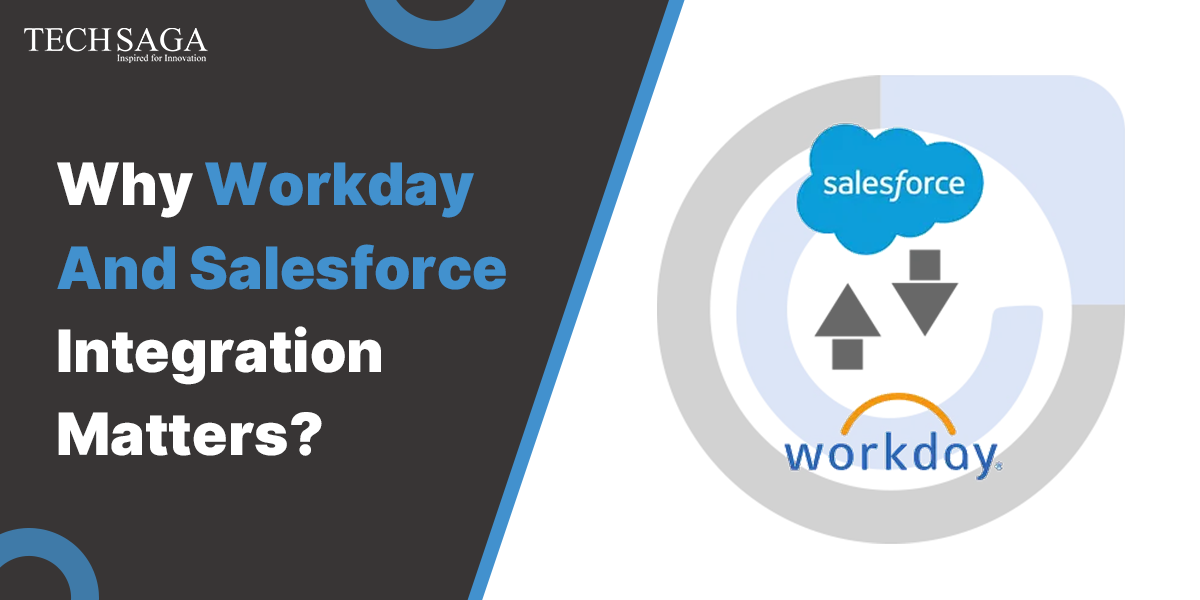
Why Workday and Salesforce Integration Matters
If you have ever worked inside a growing company, you already know this feeling. Sales teams live inside Salesforce. HR teams depend on Workday. Finance jumps between systems. Leaders want one clear picture, but the data sits in different places. It feels messy. A little frustrating, honestly. This is exactly why Salesforce Integration with Workday matters so much today.
It is not just a technical thing. It is about making daily work smoother, faster, and less stressful. When systems talk to each other, people work better. Decisions feel easier, and the business finally moves as one connected unit.
Let’s talk about why this integration is becoming so important and why companies working with Techsaga Corporations are paying close attention.
The Reality of Workday and Salesforce Disconnected Systems
Most enterprises did not plan to become complex. It just happened.
Salesforce handles customer data, deals, and forecasts. Workday manages employees, payroll, and performance. Both are powerful on their own. But when they do not connect, teams end up doing extra work.
You may see things like:
- Manual data entry between systems
- Different versions of the same information
- Delays in reporting and approvals
- Teams asking each other for updates instead of checking dashboards
Over time, these small issues grow. They slow teams down. They increase errors. They also make leadership decisions harder.
Connected Enterprise Systems help fix this gap, and data integration with Salesforce Workday plays a big role here.
What Workday and Salesforce Integration Means
At a simple level, Salesforce Integration with Workday means data flows automatically between the two platforms.
Employee data from Workday can support Salesforce access and role management. Sales performance data from Salesforce can inform HR planning in Workday. Finance can connect revenue forecasts with workforce planning. Everything starts to line up.
It is not about replacing systems. It is about letting them support each other.
When done right, this integration feels quiet. It works in the background. Teams do not even think about it. They just notice that things feel smoother.
Why this integration matters more than ever
Business today moves fast. Teams are remote. Data changes daily. Leaders want real-time insights, not last month’s reports.
This is where integration between enterprise systems becomes essential. Here is why Salesforce Integration with Workday truly matters.
Better decision-making
When sales data and workforce data come together, leaders see the full story. Instead of guessing, decisions feel grounded.
They can answer questions like:
- Do we have enough people to support future sales?
- Are high-performing teams properly staffed?
- Where should we invest next?
Less manual work for teams
No one enjoys copying data from one system to another. It is boring. It also leads to mistakes.
With the data integration feature of Salesforce Workday, updates happen automatically. Teams spend less time on admin work and more time on real work.
This alone can change how people feel about their day.
Improved employee experience
When HR and sales systems are connected, onboarding becomes smoother. Role changes reflect faster. Access rights stay accurate.
Employees do not have to chase IT or HR for fixes. Things just work. That builds trust inside the organisation.
Stronger reporting and visibility
Reports become more meaningful when data comes from one connected flow.
Finance, HR, and sales teams can align their metrics. Leaders get dashboards that show reality, not partial views.
This clarity is powerful.
How Salesforce Integration supports a connected enterprise
A connected enterprise is not about tools. It is about alignment.
Salesforce Integration helps connect people, data, and processes. When combined with Workday, it supports both the front office and the back office. This is integrated business systems in action. Quiet. Reliable. Effective.
Here is what that looks like in real life.
- Sales forecasts connect with hiring plans
- Compensation models align with performance data
- Workforce costs match revenue growth
- Compliance and access controls stay up to date
Common Use Cases Businesses Should Care About
Every business is different, but some integration needs come up again and again.
Employee lifecycle management
When someone joins, moves roles, or leaves, Workday updates can flow into Salesforce automatically. Access stays clean. Security improves. Admin effort drops.
Sales performance and incentives
Salesforce data can feed into Workday compensation modules. Incentives become more accurate. Payout delays are reduced. Trust improves.
Workforce planning and forecasting
Sales pipelines in Salesforce help HR teams plan hiring in Workday. Growth feels planned, not reactive.
These are not small wins. They shape how a business grows.
What to consider before Salesforce Integration with Workday
Integration is powerful, but it needs care. Here are a few things to think about.
- Clear data ownership: who owns what data
- Clean data structures before integration
- Strong security and access controls
- Scalable integration architecture
This is where experienced partners matter. A rushed setup can create more problems than it solves.
Why the right integration partner makes a difference
Salesforce Integration is not just about connecting APIs. It is about understanding business flows.
A good partner listens first. They ask how teams work today. They understand where delays happen. Then they design integration that fits real needs.
Techsaga Corporations takes this approach seriously. Their team focuses on practical outcomes, not just technical delivery.
They know that Salesforce Workday Data Integration must support people, not confuse them.
How Techsaga Corporations approaches Salesforce Integration
Techsaga Corporations works closely with enterprises to build integration that feels natural and reliable.
Their approach includes:
- Understanding business goals before design
- Creating scalable integration of enterprise systems frameworks
- Ensuring data accuracy and security
- Testing real-world scenarios, not just happy paths
- Providing long-term support and optimization
This focus helps clients move toward truly connected business systems, without disrupting daily work.
The long-term value of connected systems
Integration is not a one-time project. It is a foundation.
Once Salesforce and Workday are connected, businesses find it easier to integrate other tools. Marketing platforms. Finance systems. Analytics tools.
The organisation becomes more flexible. More confident. More ready for change.
And that matters in a world that keeps shifting.
Final Thoughts
Salesforce and Workday are both strong platforms. But their real power shows when they work together.
Salesforce Integration with Workday helps break silos. It reduces manual work. It supports better decisions. Most importantly, it makes work feel less heavy for teams.
This is not about technology for the sake of it. It is about creating flow inside the business.
Is Techsaga Corporation a Good Choice for Workday and Salesforce Integration?
Techsaga Corporations understands that integration should feel human, not complicated.
Their expertise in Salesforce Integration, Integration of Salesforce Workday Data, and Enterprise System Integration helps businesses build systems that actually support people.
If your goal is to move toward integrated company systems that grow with you, Techsaga Corporations brings the clarity, experience, and care needed to make it happen.
Sometimes, the best technology is the kind you barely notice, because everything just works.
TAG: Salesforce