
Team Techsaga
Gain valuable insights and stay updated with the latest innovations through our engaging blog. Explore trends, technology advancements, and expert opinions to navigate the ever-evolving world of IT.
How to Optimize Conversion Rates to Improve Your Marketing Strategy
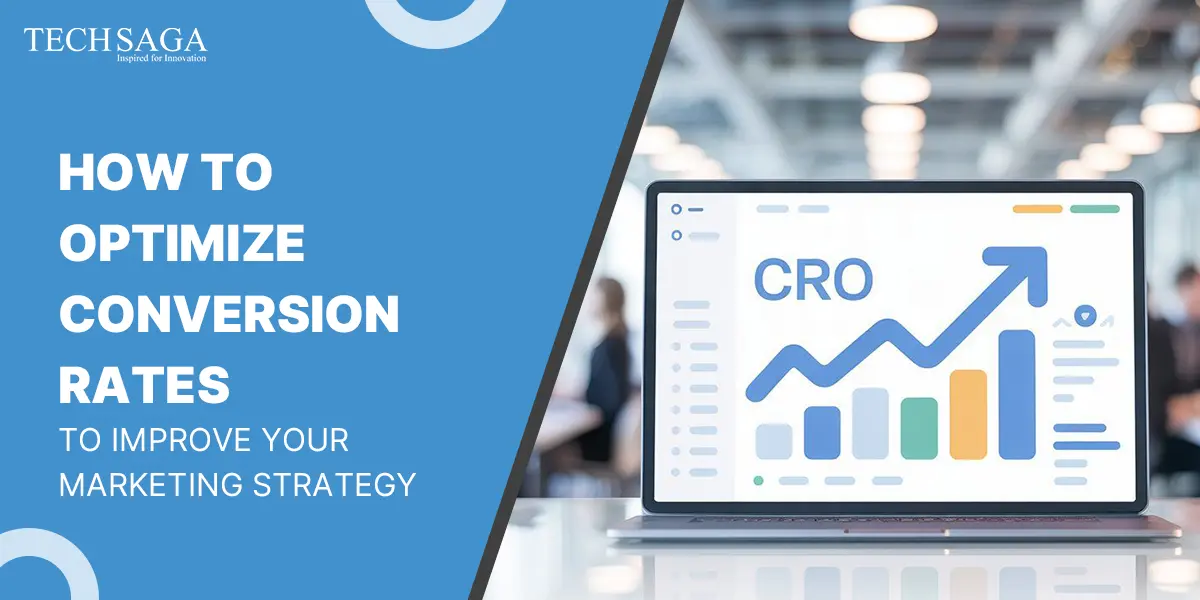
Every digital interaction has a purpose. Visitors arrive with interest or intent, yet many leave without taking action. This gap does not mean failure, but it highlights opportunity. Optimizing Conversion Rates helps turn interest into meaningful results. At the same time, it strengthens the overall marketing strategy by making better use of existing traffic. Rather than pushing harder, optimization focuses on clarity, comfort, and trust. This approach feels calm, human, and sustainable.
Why Conversion Optimization Matters Today?
Optimization matters because attention has become limited. People scroll very fast these days, and because of this, choices feel endless. Therefore, websites must guide gently and clearly. The moment pages start feeling confusing, users leave, but when pages feel simple, users stay and interact with the content.
Better optimization is important to protect budgets. Traffic costs two important aspects, time and money. Improving performance means each visit provides more value. As a result, growth feels stable instead of stressful. Another reason lies in behavior. People act when paths feel clear because they prefer ease. Optimization respects this natural behavior rather than forcing decisions.
How Optimization Supports Long-Term Growth?
Optimization builds a strong foundation from the very beginning. It improves results without increasing spend. Over time, this creates consistency. When campaigns perform better, conversion rates get higher, and content automatically performs better. Even small gains compound and give more than satisfactory results.
As decisions rely on data, not assumptions, teams move with direction. A direction in decisions helps in growth. Most importantly, optimization puts users first because when users feel understood, trust grows, and trust leads to action.
Core Elements that Influence Action
Page clarity
Page clarity removes unnecessary mental effort. Each page should answer one main question with headlines explaining value quickly. Subheadings should guide the flow. Place buttons in a way that they show the next steps clearly without any confusion. Busy layouts distract users. Meanwhile, clean layouts invite focus. And because of this, clarity often improves performance. One important aspect is simple language. For instance, short sentences feel friendly, and clear words reduce doubt. A user should feel at ease visiting the website.
Trust signals
People act when they feel safe. For this, reviews and testimonials help hugely. Clear contact details also help. In addition to that, consistency builds trust, so the use of fonts, colors, and tone should match across all the pages. When everything feels aligned, users relax. Here, security indicators also matter, and that’s why secure connections reassure visitors without even any need for words.
Ease of use
It should always feel easy to use. Forms should ask for less, for example, only 2 or 3 details are enough. Navigation should feel obvious, and pages should load fast. As of now, mobile experience matters because a lot of users browse on phones. The easier the steps, the more action will be taken, making conversion rates more prominent instead of just a spike in traffic.
Using Data and Testing Ideas
Using Data to Guide Improvement
Data shows what people actually do. It reveals pauses, exits, and hesitation. Tools like heatmaps and session recordings make behavior visible. As patterns often appear quickly, some sections get ignored, and some buttons get missed.
These insights guide meaningful changes. Because data about everything reflects reality, it removes guesswork. Doing any change feels more purposeful than just guessing, like trial and error.
Testing Ideas with Confidence
Testing compares two versions of a page. One remains unchanged, and the other includes a small improvement. The results then show what works better. Testing builds trust in decisions as it also replaces opinions with evidence.
Small tests work best, so changing one element at a time will work best. And over time, testing creates learning, which creates progress.
Two Areas Worth Testing
Headline Clarity
Headline clarity is essential for improving conversion rates. A strong headline should communicate value instantly, align with user intent, and remove any confusion. When visitors understand the message within seconds, they are more likely to stay, engage, and explore further.
Action Buttons
Action buttons play a key role in guiding users toward the next step. They should use clear, simple language and stand out visually on the page. Well-designed buttons make navigation easier, build confidence, and encourage users to take action, leading to better conversion results.
Aligning Optimization with Users’ Intent
Not all visitors arrive ready to act; some explore, and others compare. Pages should respect these stages and not force the user to do something. Clear and straightforward offers only support decision-ready users. Because of this, matching content to intent is important as it improves results.
Listening to behavior helps a lot while optimizing content here. Factors like scroll depth and click paths reveal the intent of a user clearly. As user behavior changes often, devices evolve, resulting in a shift in expectations. Staying aware of marketing trends helps keep optimization relevant, which ultimately provides better conversion rates from the user’s side.
The Role of Social Channels in Conversion Rates
Social platforms shape perception before even actual visits happen. Thus, familiarity builds comfort. When users land on a page, they expect continuity. Messaging from the websites or applications should align with social content. The tone across all channels should feel consistent, and the visual style should match, too. This alignment supports Social Media Growth topics by turning attention into action as smooth journeys feel trustworthy.
Common Barriers to Better Results
Too many choices
Too many options cause a delay as the user feels confused. One clear goal per page works the best. A steady focus reduces stress around optimisation. When choices are reduced, clarity improves by itself.
Slow performance
Slow speed affects patience very much. Short delays reduce action, while faster pages feel reliable and professional. We should focus on improving speed to bring immediate gains. Metrics should tell a story because raw visits do not give anything in return. We should focus on trends over time. Steady improvement in conversion rates signals health, whereas sudden spikes matter less.
Conclusion
Optimization acts as a bridge from effort to the outcome. It strengthens every channel for better conversion rates so that SEO traffic gets converted into real-time leads. Paid traffic costs less per result. Social traffic feels warmer as people don’t just surf and go. Over time, this efficiency supports a more profitable business. Costs stay controlled. Results become predictable. Growth feels sustainable. Optimization does not rush growth. Rather, it makes an easy path for customers to stay loyal for a long time.
Optimizing performance is about understanding people. Clear paths, simple words, and honest design create comfort. Comfort builds trust, which leads to action. When optimization becomes part of strategy, growth feels steady and human. Over time, this thoughtful approach delivers lasting value.
With Techsaga’s expertise in conversion rate optimization, brands can improve performance, engagement, and measurable marketing results.
TAG: Marketing